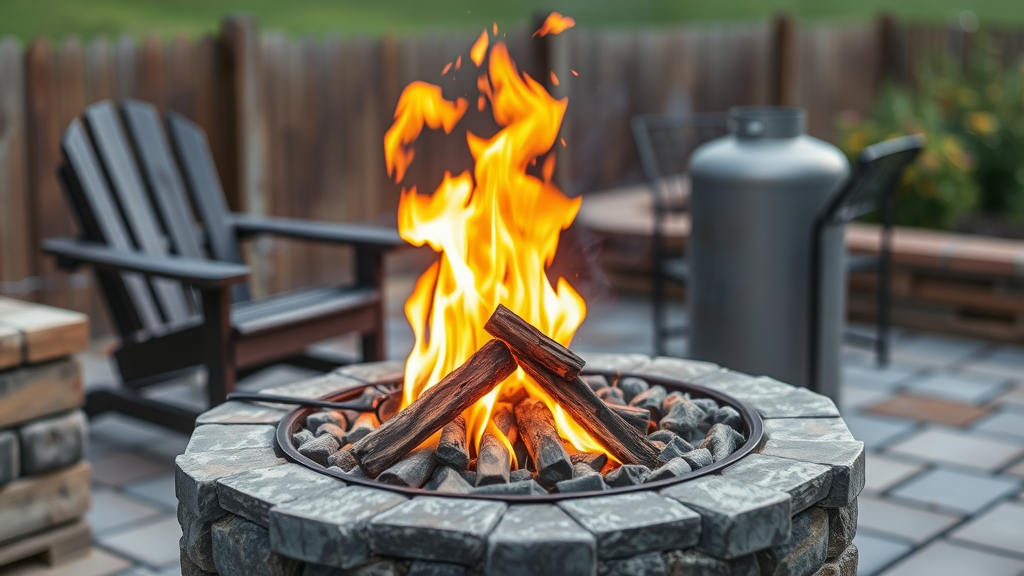
When choosing between a propane and wood fire pit, there are several factors that could impact your decision. Each type has its unique features, benefits, and drawbacks. Understanding these differences can lead you to make an informed choice suited to your outdoor living space and entertainment needs.
Fuel Source
Propane fire pits are fueled by gas, making them incredibly convenient. You can ignite a propane fire pit with the flick of a switch, providing instant warmth and ambiance. In contrast, wood fire pits require gathering, chopping, and storing wood, along with a more hands-on approach to starting the fire.
Heat Output
When comparing propane vs wood fire pits, heat output is crucial. Propane generally offers a more controlled and consistent heat, allowing for better temperature management. Wood fire pits can produce a higher heat output initially but may fluctuate as the wood burns, making it less predictable.
Maintenance
- Propane: Minimal cleanup, just need to refill the tank occasionally.
- Wood: Requires ongoing maintenance, including ash disposal and the need to ensure dry wood is available.
Atmosphere and Flavor
For many, a wood fire pit provides a rustic charm and aromatic smoke, contributing to an outdoor experience often associated with cooking marshmallows and sharing stories. However, propane fire pits deliver a clean burn without the smoky taste, ideal for those who prefer a less intense scent while lounging outdoors.
Safety
Safety is another significant consideration. Propane fire pits are generally safer, as they produce less ash and embers compared to wood fire pits, reducing the risk of accidental fires. Additionally, propane pits often come with safety features like automatic shut-off valves.
Ultimately, the choice between a propane and wood fire pit depends on your preferences, lifestyle, and outdoor living goals. Each type brings its own charm and functionality, making them both excellent options for enhancing your outdoor experience.